
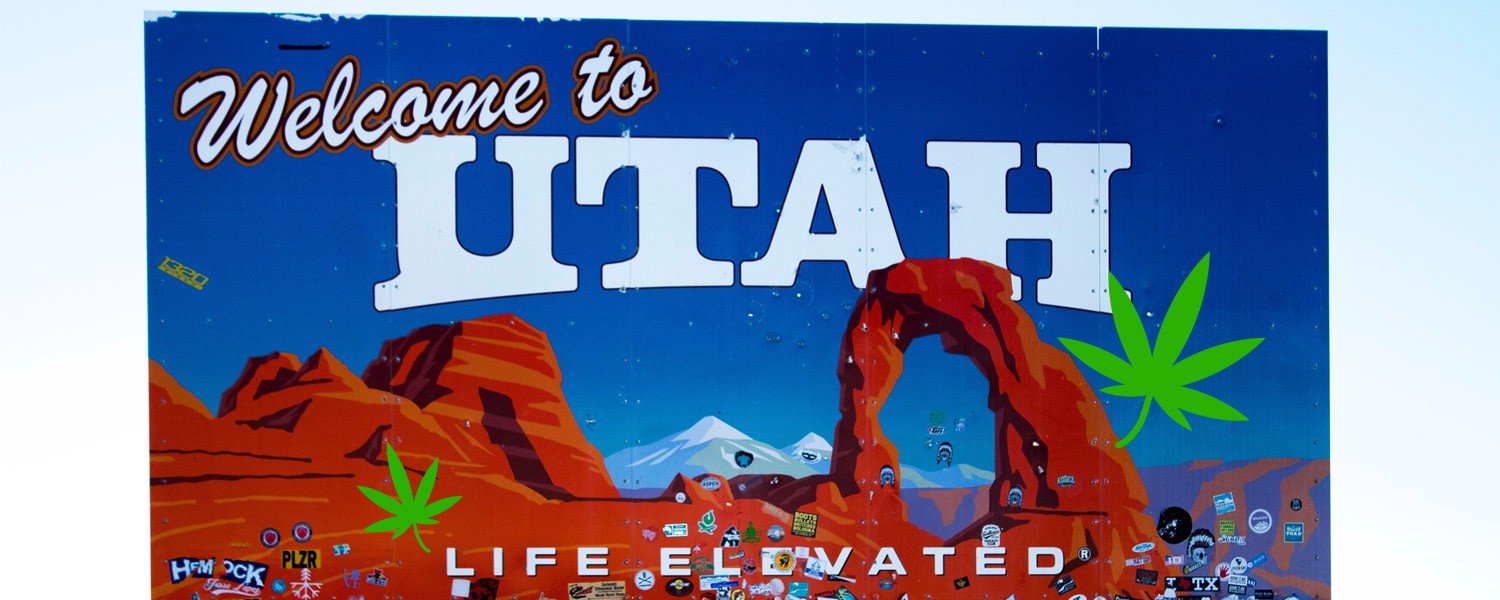
Utah voters approved Proposition 2, The Utah Medical Cannabis Act, on November 6th, 2018. It passed by a significant majority of 52.75% to 47.25%, a difference of about 60,000 votes in an election with just over one million votes. But lawmakers already overwrote it on December 3rd, giving it far stricter rules before it ever had a chance to go into effect.
The Utah Medical Cannabis Act passed
The act was designed to create a process for patients to receive medical marijuana cards as well as stipulating conditions under which people are allowed to grow and sell the plant.
The list of qualifying illnesses is a bit more restrictive than many other states we’ve seen legalize medically, but it’s a decent start and less restrictive than one might expect coming out of such a state.
Following legislative changes to the bill, it will only allow seven dispensaries statewide and will prohibit patients from growing their own supply, even if they are hundreds of miles from the nearest dispensary.
Despite voters lining up to voice their discontent with compromise, the bill was passed virtually unopposed by lawmakers, 60-13 in the Utah House and 22-4 in the Senate.
In effect December 1
The act contained a few changes that take effect almost immediately. Among them:
- Affirmative defense – when someone is prosecuted for a marijuana-related offense between the passing of Prop 2 and medical cards being made available, that individual may not be prosecuted as long as they assert that they would be eligible for a medical card when it is made available. (58-37-3.7)
- Probable cause – the visible presence of cannabis or paraphernalia no longer constitutes probably cause for a search. (26-60b-204)
Both of these went into effect December 1, 2018, and were not altered by the compromise bill.
The Utah Medical Cannabis Act
- In the original bill, individual counties weren’t allowed to ban dispensaries or grow facilities. (4-41b-405) The compromise bill effectively allows for this since there will be only seven total dispensaries.
- Landlords may not refuse to rent on the basis of a medical marijuana card. (26-60b-110). This is not affected by the compromise.
- Medical cannabis is exempt from sales tax. (59-12-104.7)
- Maximum of two ounces of flower or ten grams of concentrate per two-week period per licensed citizen. This would be tracked in a statewide database, so unlike some states, you would not be able to simply visit a different dispensary.
Changes no one asked for
Despite the LDS Church spending huge amounts in order to make their position on Prop 2 abundantly clear, voters still chose to pass it by a significant majority of 52.75% to 47.25%. Yet, the law that actually goes into effect will be much closer to what the LDS Church wanted all along than what voters actually approved and voted on.
The Utah State Legislature was already planning to overwrite the will of the people before Prop 2 even passed. Calling it a “compromise” (the existing legislation looked to already be a compromise heavily favoring opponents, but I suppose my bias is obvious), House Speaker Greg Hughes has been working with the sponsors of Proposition 2 and its major opponents such as the Utah Medical Association and The Church of Jesus Christ of Latter-day Saints to produce a replacement bill.
The legislature convened on December 3rd for a special session to consider the bill. Given that over 90% of the legislature are members of the LDS church, it’s no surprise that the bill passed virtually unopposed, 60-13 in the House and 22-4 in the Senate.
“Compromise” Changes
The main effects of the compromise are to reduce the already too low number of qualifying illnesses, outlaw growing almost everywhere, and ensure that the dispensaries are a state-run monopoly much like the liquor stores in Utah.
The changes to proposition 2 completely removed the right of patients to grow cannabis on their own property. Only patients over 100 miles from a dispensary would have been allowed to grow their own, so this change only serves to deny medication to people who have no other access to it. What’s the positive effect of this? I’m stumped. People 100 miles from a dispensary are not likely to be in such close proximity that growing on your own property should be outlawed.
The new bill also eliminates private dispensaries. Instead of giving licenses, the state will run all cannabis stores as a government-owned, legally enforced monopoly enterprise. There will be only seven dispensaries, state-wide, and ten grow facilities.
As a result of both these changes, tens of thousands of Utah citizens will be located prohibitively far away from any legally accessible cannabis, and thereby be denied medication that the state has officially acknowledged they need, for no reason other than their geographic location.
Proposition 2 originally included specific provisions for licensing growers and sellers in a way that would not create such a monopoly. The effects of state-controlled stores are already well known and despised by Utah residents, as liquor stores cannot be privately owned there. The result is some of the highest liquor prices in the nation and liquor stores that are few and far between, and all woefully lacking in selection.
We can definitely expect to see very similar results in state-run dispensaries. Don’t be surprised when Utah has the highest weed prices in the nation, and the worst selection.
On top of these two already massive changes to what Utah voters approved, the new bill also alters the language which would have allowed medical professionals to recommend cannabis. Under the new phrasing, it’s quite possible that a medical practitioner could be prosecuted for prescribing marijuana. This is likely an unintentional oversight in the language of the act, but it opens up a whole new and ridiculous line of argument for overzealous prosecutors.
Backlash
The bill was rammed through following a five and a half hour hearing which took place at the Utah state legislature one week prior. At the hearing, nearly every public comment voiced was in support of Prop 2 being implemented exactly as it was voted on.
Former Mayor Rocky Anderson had scathing remarks for the legislature prior to their passing the bill. He said this in a statement about the possibility of legal action against the legislature:
Although initiative statutes may be amended or repealed by the Legislature, the almost immediate extreme undermining of numerous provisions of Proposition 2 at the behest of The Church of Jesus Christ is anti-democratic and contemptuous of the … recognition in the Utah Constitution that the people are to have the power to enact legislative changes
Former Mayor Rocky Anderson, attorney at law
via SLTrib
The changes did go through, and Rocky Anderson did indeed file his lawsuit that same day, almost immediately, tweeting this the following day:
Utah residents are keenly aware that West Wendover recently legalized recreational sales. At just 90 minutes from Salt Lake, For many Utah residents, that’s going to be less of a pain than dealing with the arcane Utah legislation.
And of course, it goes without saying that this legislation will be quite a boon to the black market.
On the bright side
Despite Proposition 2 not going into effect as it was voted in, even the so-called compromise will be miles better than the cannabis situation in South Korea. At least it provides some medicine to some people who need it. It’s at least a start, and hopefully things will continue to move in the right direction.