
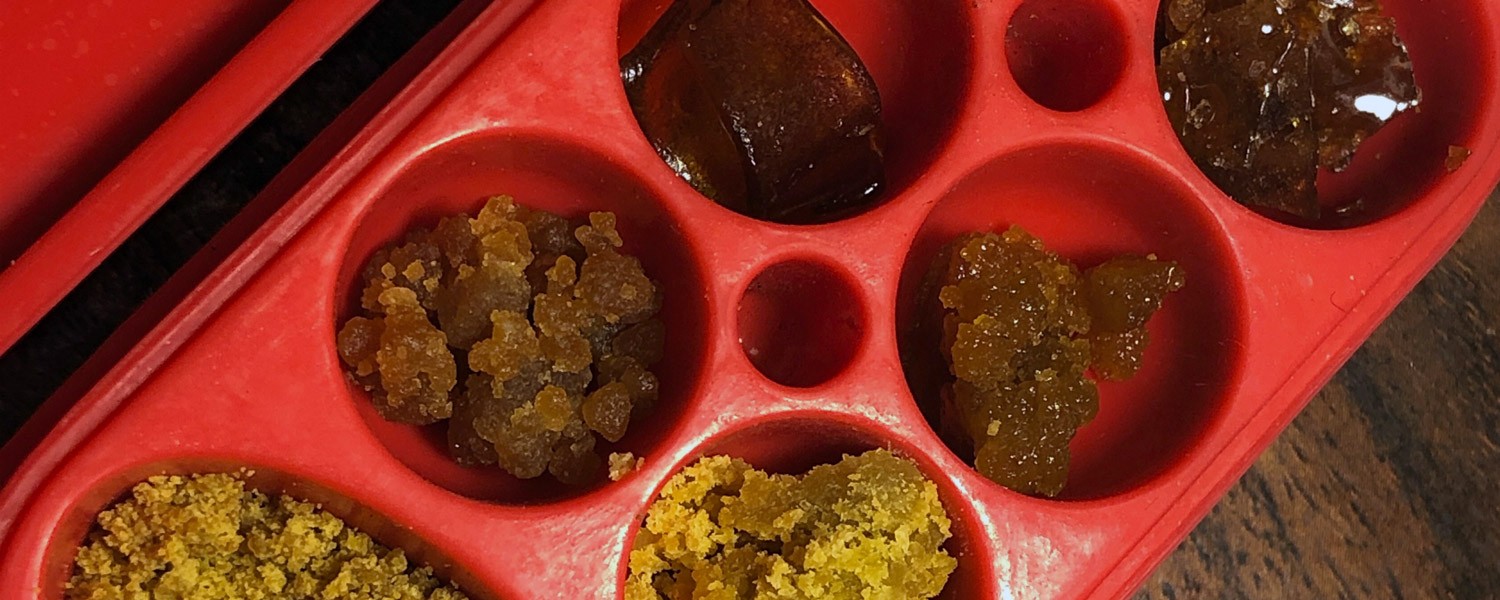
There are many different products created from cannabis concentrate, and even more different things you might call it. The terminology used for concentrates can be very confusing for people who are new to the world of extracts. In this article, we’ll straighten out all the different terms used to refer to cannabis oil and what, if any, the differences in the meanings of the terms are.
Sorting through the many different terms surrounding hash oil
Unfortunately, there is no real standard in this space yet, so it’s quite common for people to use many of these words interchangeably, and even disagree on the correct usage in some cases.
I’m going to do my best to sort it out and offer the most common meanings for each term, but feel free to let me know if you’ve used a term differently, or if I missed an important term you’ve heard used.
General concentrate terms
We’ll start out by looking at terms that encompass multiple types of concentrates made from weed.
Hash or hashish
Hashish or more commonly just “hash” is probably the most general term, as well as the oldest term, for referencing products derived from marijuana.
Technically, hash refers to the resin of the cannabis plant. The resin of marijuana contains the terpenes and cannabinoids which characterize the effects that occur when ingested.
Conversationally, you will most likely to hear it referred to as old-school hash, since the newer forms are far more prevalant on the market.
Old-school hash
Old school hash is the oldest form of marijuana concentrate. It generally has a powdered or hardened brick-like consistency, and originally began as a method of making it easier to transport a product of
There are a few different ways to make it, but they are all generally simple and low-tech methods. We’ll get more into some of the ways it’s made when we cover other terms, but first, let’s about its opposite.
New-school hash
New school hash refers to the newer methods of cannabis extracts which started appearing on the scene fairly recently, with the legalization of recreational cannabis in many locations. As you’d probably expect, it excludes the old school methods of extraction.
These newer extraction methods often use a solvent (although there are also solventless extracts) and pressurization to produce a product with a very different consistency than old-school hash. The consistencies can vary quite a bit, from that of a hard candy to syrup, or even powder or butter.
The result is definitely
This term isn’t very commonly used in conversation, and you’re more likely to hear people refer to it as concentrate, extract, oil, or just dab.
New school hash terms
Concentrate
“Concentrate” is one of the more technical words available to describe the wide variety of products derived from cannabis, you’ll also hear it used conversationally. It actually includes any type of hash, but people using it are usually talking about new school hash.
Extract
“Extract” is another more formal word, although you may often hear it used among stoners as well. Again this word can technically include any type of hash, but more colloquially would likely refer to newer concentrates.
Hash oil or just “oil”
Oil is a bit less general of a term than concentrate and extract are, and one that’s becoming a bit rarer. It usually refers to any type of new school hash. Since most of this hash is produced very similar to produce and vegetable oils, it’s no surprise that the term made it to this industry as well.
In the early days of new-school hash, this term was probably the most common you would hear. “710” has even become the new “420” for many cannabis users who prefer concentrates, because if you turn 710 upside down it spells “OIL”.

However, more recently the term has fallen out of favor quite a bit. I recently used the term at a dispensary, and they thought I was asking for a runny consistency, which they didn’t have (and I don’t blame them, as that wouldn’t be desirable to most).
Dab
Another term for new school hash, and probably the most informal, is dab. This means anything that is “dabbable” – which is to say, you can easily vaporize it with a standard concentrates vaporizer such as a nail and rig or oil atomizer (pen vape), and little to no residue will be left behind.
Dab is a great term because it explicitly means anything you can dab and nothing you can’t, so most people who use concentrates will know exactly what you mean with this one.
“BHO” (butane hash oil)
Since butane was one of the original and continues to be the most prevalent form of solvent used in modern extraction processes, BHO became a pretty common term. This phrase refers specifically to hash that was extracted using butane, and it’s so widely used because butane does a great job of pulling both flavor and potency.
Even though butane is used in the extraction process, as long as the result is properly purged, there should be no butane remaining in the product. For example, Washington state law requires all extracts to test out at less than 500 parts per million of residual solvents. This is not enough to do any harm and is a tiny fraction of what is inhaled with a lighter when smoking a pipe. Which is good news, since you definitely wouldn’t want to smoke any significant amount of butane!
BHO is the most widely used form of new school hash and can be used to produce almost any consistency. It also is less expensive than many other commonly used extraction solvents.
CO2 Extracts
Extracts which were pulled with CO2 as a solvent have been on the rise lately. One of the most common applications of this is pre-filled cartridges, which are probably the most user-friendly way to enjoy concentrates, though they are not without their drawbacks. You can expect to pay a little more for CO2 based extracts.
It’s competitive with BHO in the potency department, but it tends to pull less terpenes which results in less flavor.
Distillate
Distillate is an extremely pure form of BHO that is nearly clear. In fact, many people call it “clear” which originated from some early distillate branding, called “The Clear”.
While distillate is highly potent, it does not contain terpenes as they are lost in the extraction process. However, many extraction companies reintroduce terpenes to create custom flavors and highs. You can also buy extracted terpenes to be mixed back in.
Live resin
Live resin is among the most flavorful forms of concentrates. The term applies to the product of any extraction process which uses freshly cut and frozen cannabis plants. Generally, a process that preserves a high amount of terpenes will be used.
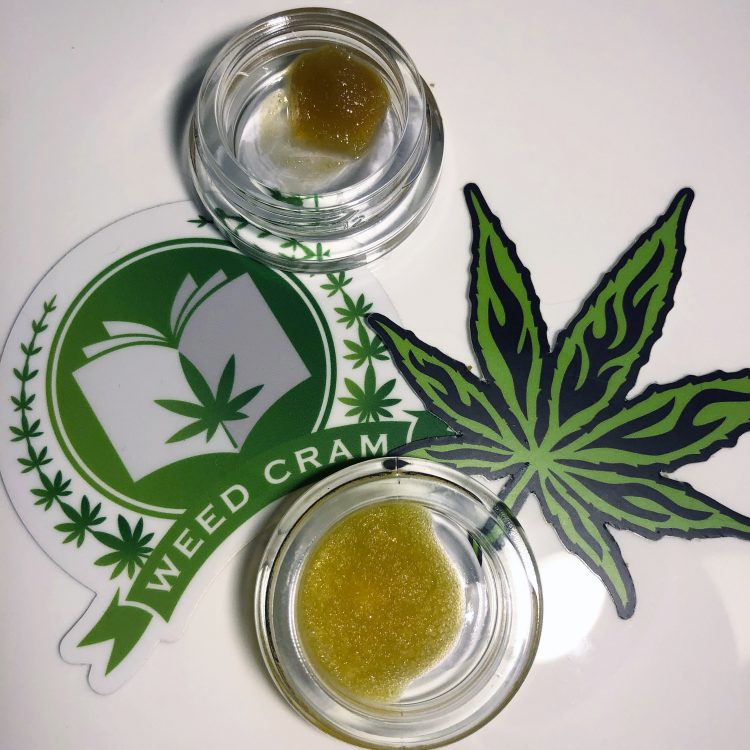
Frozen weed takes up a lot more space, which means it takes longer to process. As a result, live resin often costs twice as much as other types of extract in dispensaries.
Live resin is not necessarily more potent than standard extract, but it almost always has a much higher terpene content, making it much more flavorful and allowing one to pick out differences in the high provided by the particular strain being enjoyed much more easily.
Rosin
Rosin can be another very flavorful form of extract, and it is completely solventless. It is one of the safest, simplest and easiest methods of new school extraction. It originally started as a home project in which people would use curling irons and other household heating devices to pressurize and head small nugs of marijuana.
Simply applying heat and pressure is enough to produce a golden syrupy liquid which can then be dabbed directly, although it will often leave a bit more residue behind than other methods which are purer.
These days, it doesn’t have to be done from random parts at home. Machines can be bought from companies such as Rosin Tech and Nugsmasher which make processing larger quantities much more feasible. You can also often find rosin in dispensaries, but it is often quite expensive, even three or four times as much as the standard dab.
Live Rosin
Live rosin as you might expect combines the methods of live resin and rosin by essentially freezing the weed when it is fresh off the plant and applying a rosin press to it.
Rick Simpson Oil
A very popular type of cannabis extract is Rick Simpson Oil (RSO). Rick Simpson says he cured himself and many others of cancer using marijuana concentrate. While this is not backed by peer-reviewed studies, many swear by it.
You can’t buy Rick Simpson Oil anywhere, and you must be very careful of anyone claiming to be selling it. Rick Simpson publishes the information about how to create RSO in his book Phoenix Tears.
Nug run
A nug run is an extraction process which uses only full kolas of weed as the source. Sometimes extractions will use trim or shake, and some people prefer the taste profile that using only pure nuggets leads to.
Trim run
The opposite of a nug run, a trim run is generally considered to be of a lower quality. However, it can still be quite good, and it is often the best thing growers can do with the trimmings that are left over from a cannabis crop.
Old school hash terms
Bubble Hash or water hash
Bubble hash is probably the most “classic” form of hash, and just might be what someone is referring to if they just say “hash” without any other descriptors.
Bubble hash is made with no solvents, using nested nylon bags with progressively smaller holes to filter smaller and smaller chunks. The bags are filled with raw material and then shaken under ice water. The highest quality hash reaches the final container with particles sized under 100 microns. The hash then dries for about a week before it is usable.
Although you can technically “dab” bubble hash, you should still be sure to clean your device afterword as it still contains quite a few impurities.
Ice wax
Ice wax is the old school version of live resin. While bubble hash usually uses trim, ice wax is freshly frozen plant material. This produces a higher potency and much more flavorful hits.
Dry sift
Dry sift is a type of hash made similarly to bubble hash and ice wax but without the water. Often the cannabis is frozen and then gently moved across a silkscreen with the dry sifted hash collecting underneath.
Some industrial trimmers include a dry sift which allows for bulk kief collection during a crop harvest.
Hand rolling
Probably the first hash ever, hand rolling happens fairly automatically when you are trimming marijuana. The resin comes off on your hands and can be scrubbed off to produce a potent form of hash. It’s more of a byproduct of trimming than an intentional extraction method.
Grinder Kief
Although not generally thought of as hash yet, kief is a slightly less pure form of the same stuff. It has already been filtered, it just needs a little heat and pressure to solidify. Kief includes the trichomes that come off when you are grinding cannabis bud.
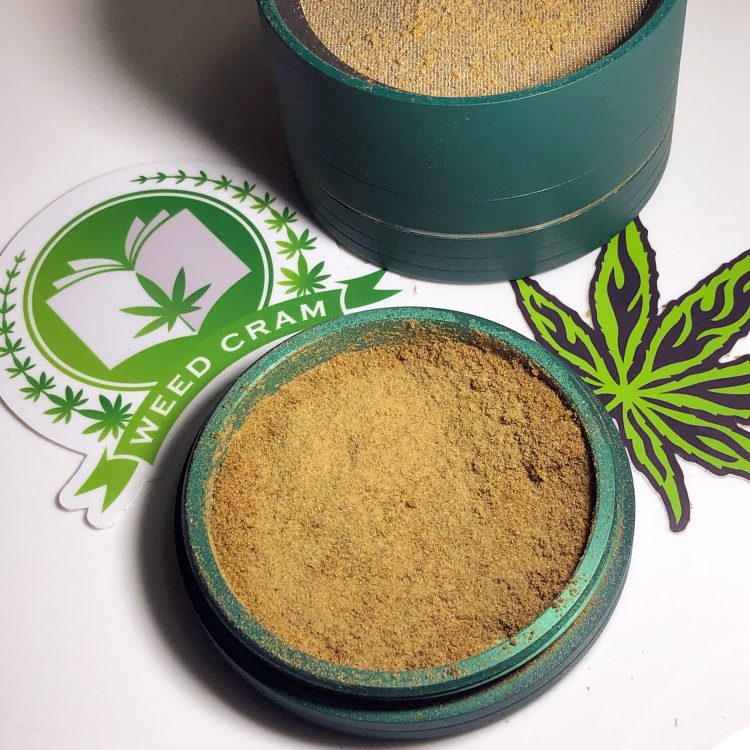
Many grinders include a kief catcher. This is probably the most common way people collect kief. The kief can then be used for various purposes including pressing it to turn it into hash, smoking directly, or even making “caviar”, a type of joint which drizzles a sticky variant of concentrate and covers it in kief.
Pressed Hash
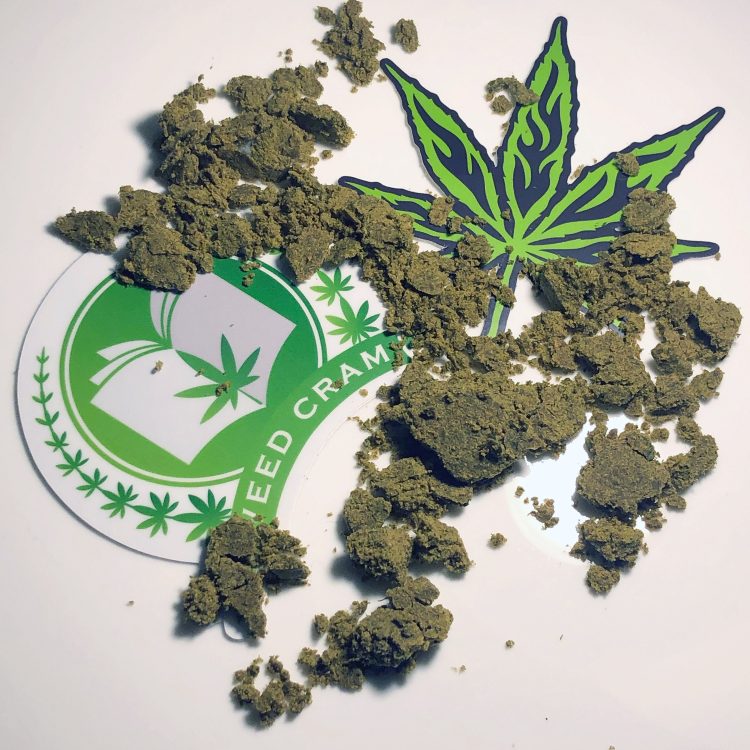
Pressed hash is kief that’s been lightly compressed and heated. This produces small powdery bricks that are brown in color. This can be consumed via combustion, similar to traditional weed, although the taste will be more enjoyable with a vaporizer.
Terms for consistencies
There are lots of different densities, firmness, and textures to cannabis extracts, and reasons to prefer some over the others. Thus, an entirely new category of terms was born. Let’s break them down.
Shatter or ice
One of the most commonly sought forms of modern hash is known as shatter, or sometimes ice. As you might guess from the name, this has a very hard and brittle consistency, with little to no viscosity. The pieces are usually semi-transparent, with lighter colors generally signifying a higher quality (though this cannot be relied upon fully).

Shatter can be produced with a variety of solvents and extraction methods. In the process, most fats and lipids are removed, thus creating the firm and stable texture. It is often sought after by people who use portable vaporization devices because it is easy to work with without getting sticky, although if it’s warm out or you hold it for too long it will still melt.
Shatter can also often be of a very high quality and potency, although it is generally more lacking in terpenes (what provides most of the unique taste of each strain) compared to some other consistencies. It varies by batch, however.
Wax
Wax is another term you’ll encounter. While it is sometimes used to refer to all new school hash, it also serves to describe a group of consistencies of hash. It is created by whipping the extract during the purging process. This introduces air bubbles which creates a crumbly or butter-like consistency often called budder.
Crumble
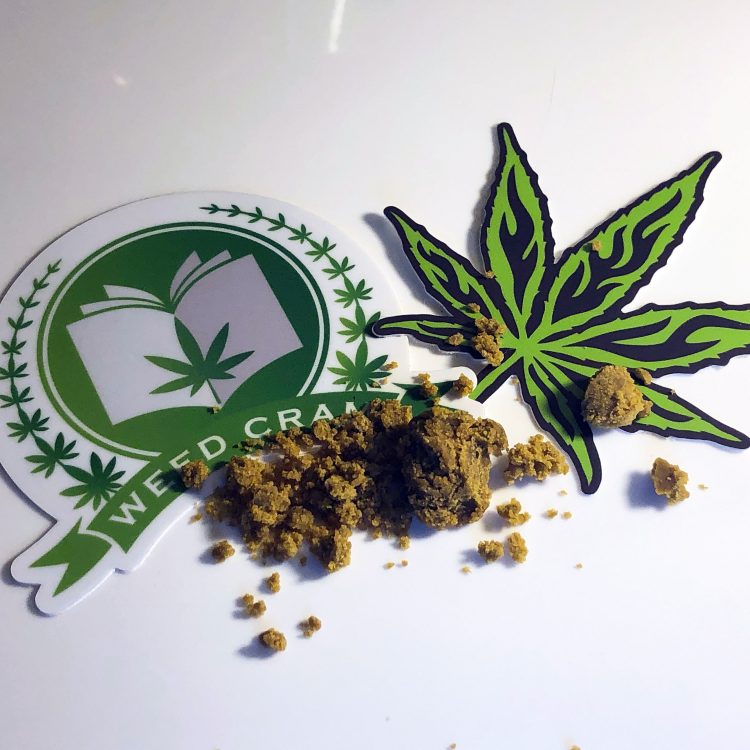
Crumble is a dry and flaky type of wax. It can also be a powder.
Budder
Budder is another wax consistency. It is a semi-solid, cream-like substance, similar to peanut butter or jelly, depending on the variant.
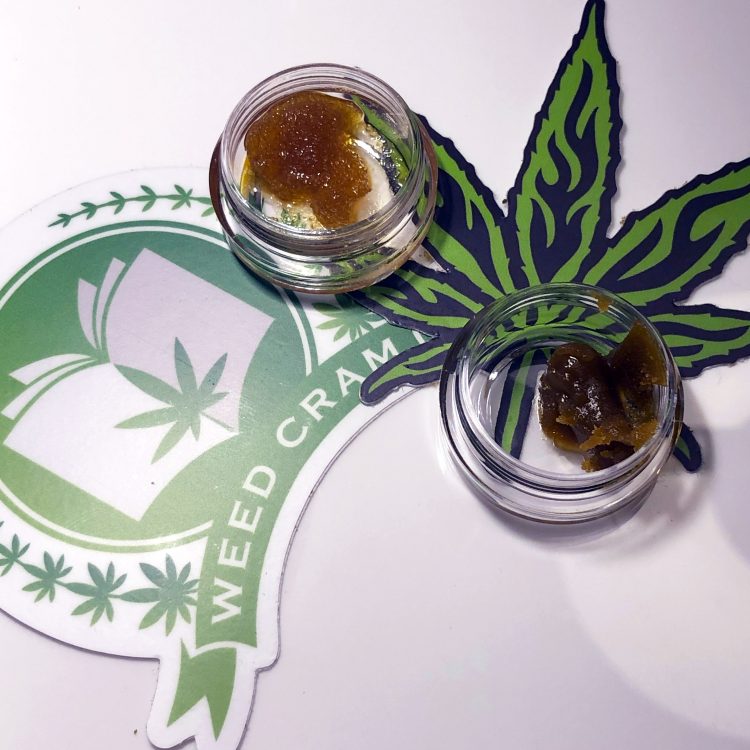
Sometimes this consistency is achieved intentionally, but sometimes it is the result of a more transparent run crystallizing or “auto-buddering”. This is particularly prevalent in live rosin. It is generally considered undesirable when this occurs, but it does not mean that the product is ruined.
Conclusion
Whew, that’s a lot of terms! Hopefully, this helped you clear up a bit of confusion! If you have any terms we missed or want to add something, please be sure to sound off in the comments below! Thank you for reading!